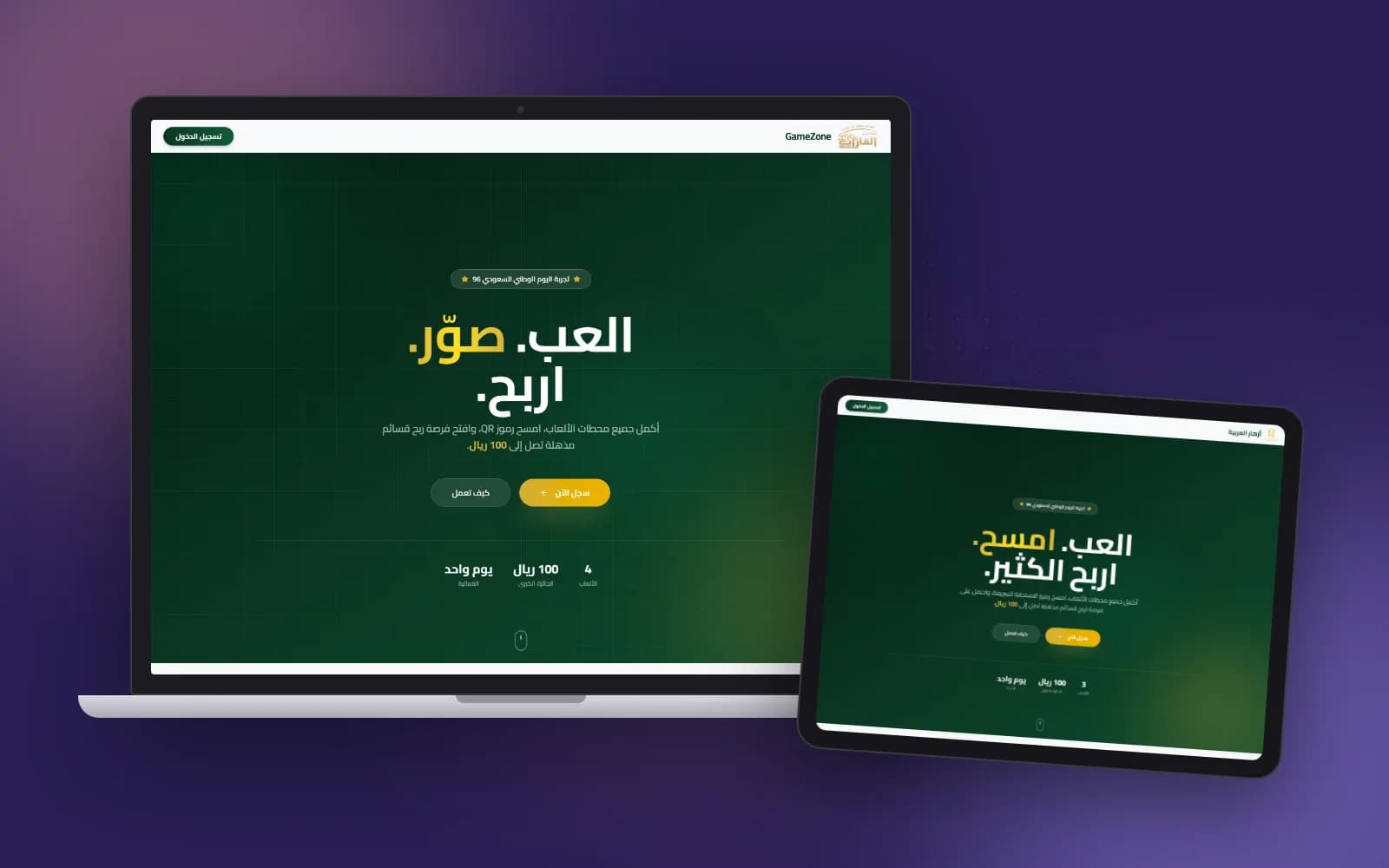
Most of the platforms we have shipped are used in Arabic first, across Egypt, Saudi Arabia, Jordan, and Kuwait. Over those projects one rule has held: an Arabic product has to be designed in Arabic. Adding a translation layer to an English design at the end almost always shows.
Right-to-left is a layout decision, not a setting
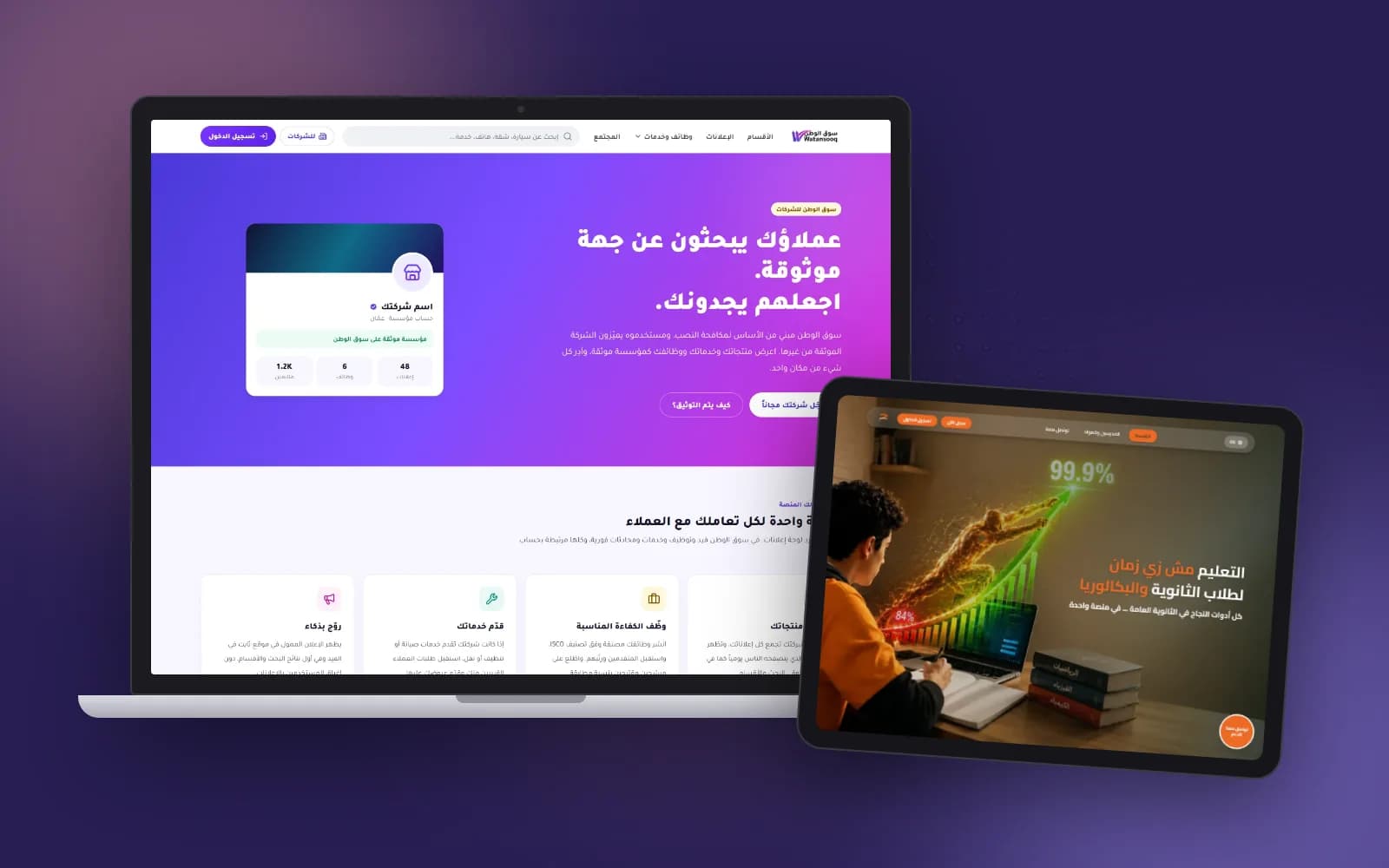
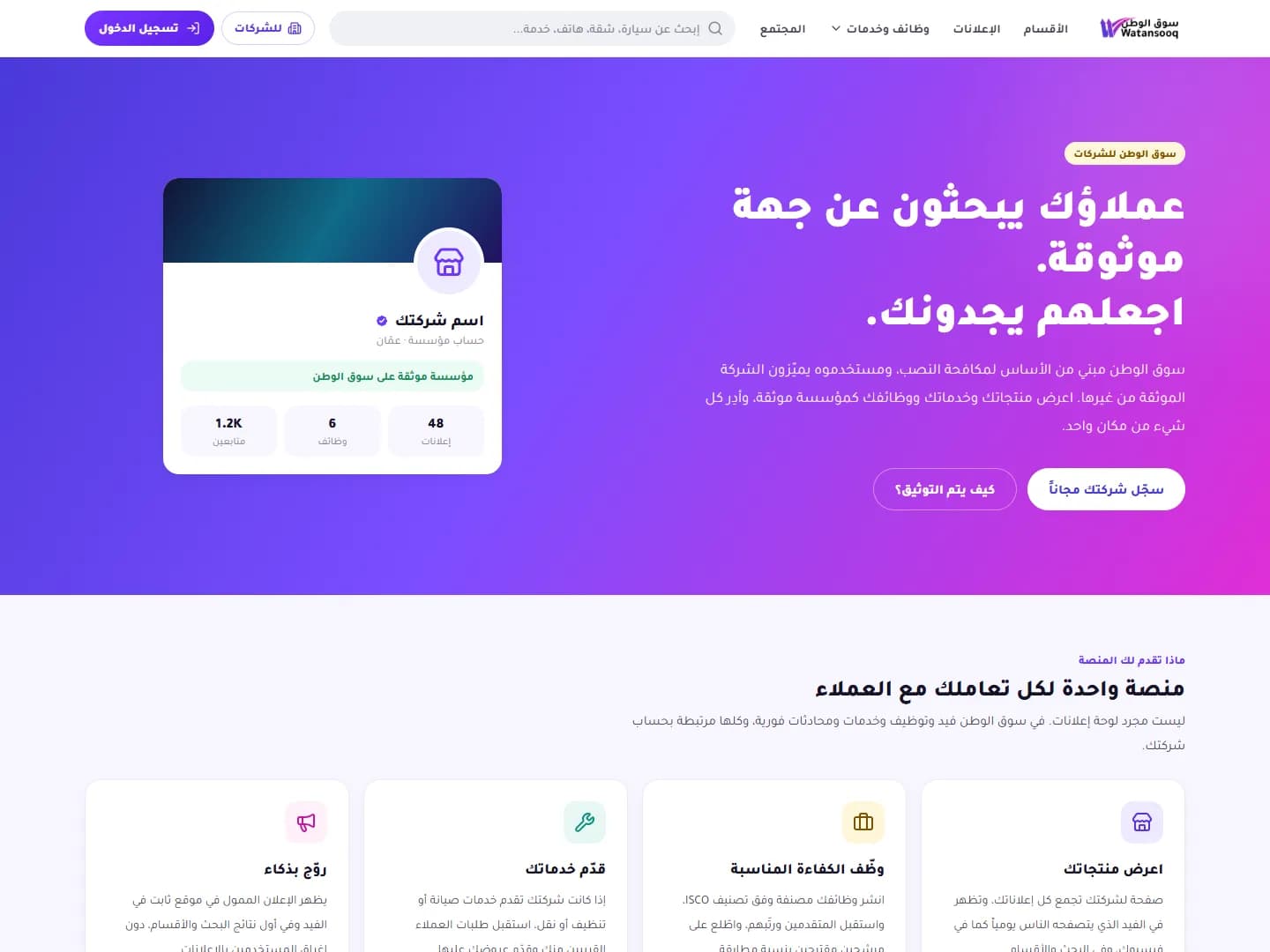
Flipping text direction is the easy part. Navigation order, icon direction, carousels, progress indicators, and the reading path through a page all change. On Watan Sooq, a classifieds marketplace for Jordan, the listing cards, filters, and business portal were laid out for right-to-left reading from the first wireframe.
Write for the audience, including dialect
Sherbeni Academy speaks to Egyptian secondary-school students in Egyptian Arabic, with an English option and a voice that addresses parents too. Choosing the register of the copy is part of the product design, because it decides whether students feel the platform was made for them.
Local habits shape features
Arabic-first also means building for how people in the region buy and trust online. A few examples from our own projects:
- Cash on delivery and pickup from a nearby distributor on the Naguib Max Motors tire store
- WhatsApp as a first-class contact channel next to the regular form
- Anti-fraud and safe-buying guidance built into Watan Sooq, where classifieds scams are a real concern
- A verified-business badge so users can tell companies from individual sellers
When you need both languages
Many clients still need English, for expatriate customers, partners, or investors. In those cases we keep both versions as equals, with a language toggle that keeps the user on the same page instead of sending them back to the home page.